


Imagine waking up in the morning and your alarm does not just wake you up. It tells your coffee maker to start brewing. Your thermostat has already adjusted the temperature in your home to exactly the way you like it in the morning. Your refrigerator has noticed you are running low on milk and has already added it to your online shopping list. And by the time you step out of the door your car has checked the traffic and suggested the fastest route to your destination.
This is not a scene from a science fiction movie. This is the Internet of Things. And it is already happening in homes, businesses, hospitals, farms, and cities all around the world right now.
Most people have heard the term Internet of Things at some point. Very few actually understand what it means, why it matters, or how deeply it is already woven into the fabric of everyday life. By the end of this article that is going to change.
We are going to break down exactly what the Internet of Things is, how it works, and the remarkable ways it is already transforming the world we live in every single day. No technical jargon. No complicated explanations. Just a clear honest look at one of the most significant technological developments of our lifetime.
What the Internet of Things Actually Is
Let us start at the very beginning with a simple clear definition.
The Internet of Things, commonly referred to as IoT, is the network of physical objects embedded with sensors, software, and connectivity that allows them to collect and exchange data with other devices and systems over the internet.
In plain language it means everyday objects that are connected to the internet and can communicate with each other and with you without requiring any manual input.
Think about what makes something part of the Internet of Things. A regular thermostat that you adjust manually is not part of IoT. A smart thermostat that learns your preferences, adjusts the temperature automatically based on whether you are home or away, and can be controlled from your phone anywhere in the world absolutely is.
The same principle applies to everything from lightbulbs and door locks to industrial machinery and medical devices. If it can connect to the internet, collect data, and communicate intelligently with other systems it is part of the Internet of Things.
The scale of this network is difficult to fully comprehend. There are currently billions of connected devices operating around the world and that number is growing rapidly every single year. We are moving toward a world where almost every physical object we interact with has some level of intelligence and connectivity built into it.
How the Internet of Things Works
Understanding how IoT works does not require a degree in computer science. The basic concept is actually quite straightforward.
Every IoT device contains three essential components. First there are sensors that collect data from the environment. A temperature sensor in a smart thermostat. A motion sensor in a security camera. A heart rate sensor in a fitness tracker. These sensors are constantly gathering information about the physical world.
Second there is connectivity. The device sends the data it collects to the internet through Wi-Fi, Bluetooth, mobile networks, or other wireless technologies. This is what makes the device smart rather than just electronic.
Third there is data processing and action. Once the data reaches the internet it is analyzed either on the device itself or in the cloud and the system uses that analysis to take some kind of action. Adjusting the temperature. Sending you an alert. Turning off a light. Ordering a replacement part before a machine breaks down.
The magic of the Internet of Things is in that final step. The ability of connected devices to not just collect information but to act on it intelligently and automatically is what makes this technology genuinely transformative.
How IoT Is Transforming Our Homes
The most familiar face of the Internet of Things for most people is the smart home. And the changes happening inside our homes because of IoT are more significant than most people realize.
Smart speakers like Amazon Echo and Google Home have become the central hubs of connected homes, allowing people to control dozens of devices with nothing more than their voice. Smart lighting systems adjust brightness and color automatically based on the time of day or your activity. Smart security systems allow you to monitor your home from anywhere in the world, receive instant alerts when something unusual is detected, and even grant or deny access to your property remotely.
Smart appliances are making everyday tasks more convenient and more efficient. Washing machines that can be started remotely. Ovens that can be preheated on your way home from work. Refrigerators that track the food inside them and suggest recipes based on what needs to be used before it expires.
For families the smart home is becoming a genuine quality of life upgrade. For elderly individuals living independently smart home technology is providing safety monitoring and assistance that allows them to maintain their independence longer than would otherwise be possible.
How IoT Is Revolutionizing Healthcare
Healthcare is one of the areas where the Internet of Things is having its most profound and most life changing impact.
Wearable devices like smartwatches and fitness trackers are now capable of monitoring heart rate, blood oxygen levels, sleep quality, activity levels, and even detecting irregular heart rhythms that could indicate serious conditions. This continuous health monitoring gives both individuals and their doctors far more detailed and accurate health data than was ever available from occasional clinic visits alone.
For patients with chronic conditions like diabetes, hypertension, or heart disease IoT enabled medical devices are making remote monitoring possible in ways that are genuinely life saving. A patient with diabetes can wear a continuous glucose monitor that tracks their blood sugar levels in real time and alerts both them and their doctor if levels become dangerous. No finger pricks every few hours. No delayed responses to critical changes.
In hospitals IoT technology is being used to track the location of medical equipment in real time, monitor patient vital signs continuously, manage medication dispensing more accurately, and even track the hygiene compliance of medical staff to reduce hospital acquired infections.
The long term potential of IoT in healthcare is extraordinary. A future where your devices continuously monitor your health and alert your doctor to potential problems before you even feel any symptoms is not as far away as it might seem.
How IoT Is Changing Business and Industry
While the consumer applications of the Internet of Things make headlines it is in business and industry where IoT is perhaps having its most economically significant impact.
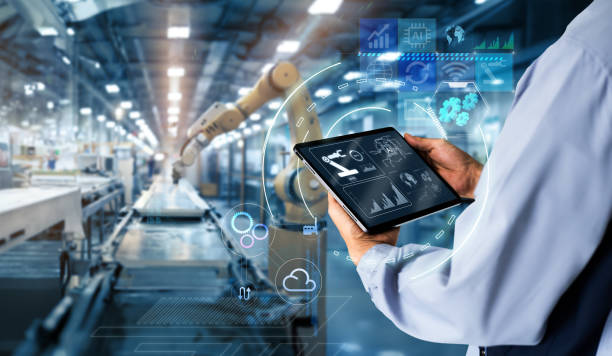
Manufacturing facilities around the world are using IoT sensors on their equipment to monitor performance continuously and predict when machines are likely to fail before they actually do. This predictive maintenance approach saves companies enormous costs in emergency repairs, production downtime, and wasted materials. A sensor that costs a few dollars to install can prevent a breakdown that would cost hundreds of thousands of dollars to fix and weeks of lost production to recover from.
In logistics and supply chain management IoT tracking technology allows companies to monitor the location, temperature, and condition of shipments in real time anywhere in the world. For industries like pharmaceuticals and fresh food where maintaining specific conditions during transit is critical this level of visibility is not just convenient. It is essential.
Retailers are using IoT technology to manage their inventory more efficiently, reduce theft through smart surveillance systems, and create more personalized shopping experiences for their customers. Smart shelves can detect when a product is running low and automatically trigger a restock order without any human intervention.
For small business owners many of these IoT applications are becoming increasingly accessible and affordable. Smart security cameras, connected point of sale systems, and IoT enabled inventory management tools that were once the exclusive domain of large corporations are now available at price points that make sense for businesses of every size.
How IoT Is Transforming Agriculture
Agriculture might not be the first industry that comes to mind when you think about cutting edge technology but the Internet of Things is quietly revolutionizing the way the world grows its food.
Smart farming uses IoT sensors placed throughout fields to monitor soil moisture levels, temperature, nutrient content, and other conditions in real time. This data allows farmers to make precise decisions about when and where to irrigate, fertilize, or intervene to protect crops from disease or pests. Instead of applying water or chemicals across an entire field uniformly farmers can target exactly the areas that need attention. The result is healthier crops, significantly lower costs, and a much more sustainable use of precious resources like water.
Livestock farmers are using IoT devices to monitor the health and location of their animals continuously. Sensors attached to cattle can track activity levels, feeding patterns, and vital signs and alert farmers immediately when an animal shows signs of illness. Early detection means faster treatment and far better outcomes for both the animals and the farmers who depend on them.
In a world where feeding a growing global population sustainably is one of the defining challenges of our time the efficiency gains made possible by IoT in agriculture are not just economically important. They are genuinely critical.
How IoT Is Building Smarter Cities
Beyond our homes, hospitals, and businesses the Internet of Things is reshaping the very cities we live in.
Smart city technology uses interconnected IoT systems to manage urban infrastructure more efficiently and more responsively than has ever been possible before. Smart traffic management systems analyze real time data from sensors throughout a city to optimize traffic flow, reduce congestion, and adjust signal timing dynamically based on actual conditions rather than fixed schedules. The result is less time stuck in traffic, lower fuel consumption, and reduced emissions.
Smart street lighting systems adjust brightness based on whether people are actually present, saving enormous amounts of energy and maintenance costs compared to traditional systems that burn at full power all night regardless of need.
Waste management is being improved through IoT enabled bins that signal when they are full and need to be collected, allowing waste collection routes to be optimized dynamically rather than following fixed schedules that often result in trucks collecting half empty bins or missing overflowing ones.
Water management systems use IoT sensors to detect leaks in pipes quickly, monitor water quality in real time, and optimize distribution across a city. In regions where water scarcity is a serious challenge this kind of intelligent water management is not a luxury. It is a necessity.
The Challenges and Concerns Around IoT
It would not be honest to discuss the Internet of Things without acknowledging the very real challenges and concerns that come with it.
Privacy is the most significant concern for most people. Every IoT device is a data collection point. The more connected devices you have in your home, on your body, and in your workplace the more data is being collected about your behavior, your health, your location, and your habits. Understanding who has access to that data, how it is stored, and how it is being used is a question every individual and business should be asking seriously.
Security is closely related. Every connected device is a potential entry point for cybercriminals. Many IoT devices are manufactured with minimal security features and are rarely updated once deployed. A poorly secured smart device on your home network can potentially give a hacker access to everything else on that network including your computer, your phone, and your financial accounts.
The environmental impact of billions of connected devices consuming energy and generating electronic waste is also a genuine concern that the technology industry is only beginning to grapple with seriously.
These challenges do not make IoT bad. They make it something that deserves thoughtful implementation, strong regulation, and informed consumers who understand what they are connecting to their lives.
The Bottom Line
The Internet of Things is not a distant future concept. It is here right now transforming the way we live, work, stay healthy, grow food, and run our cities in ways that are both remarkable and deeply practical.
From the smart device on your wrist tracking your health to the sensors in a factory preventing a costly breakdown to the connected systems managing water and traffic in cities around the world IoT is quietly making the world more efficient, more responsive, and in many ways more human.
Understanding what the Internet of Things is and how it works does not require a technical background. It just requires the curiosity to pay attention to the world changing around you and the wisdom to engage with that change thoughtfully.
The connected world is already here. The only question is how well prepared you are to navigate it.
For more practical honest content on technology, finance, business, and marketing that actually makes sense in the real world visit Monetivio.com. We write for real people who want to understand what is happening and make the most of the opportunities it creates.