
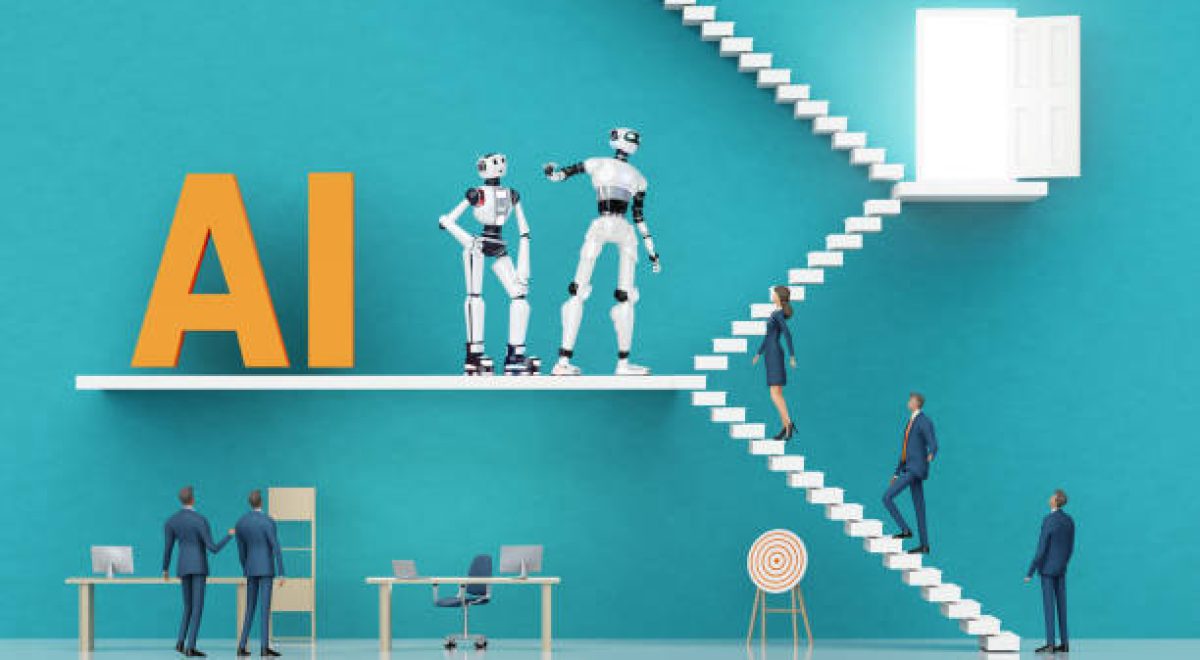
The way people work is changing faster than most are prepared to admit. Not gradually, not theoretically, but right now, across industries, in offices, warehouses, call centers, and corporate headquarters around the world. The conversation used to be about whether artificial intelligence would eventually affect jobs. That conversation is over. The real question today is how deeply, how quickly, and what comes next.
AI agents are at the center of this shift. Understanding what they are, what they are already doing, and where they are headed is no longer optional knowledge for professionals who want to stay relevant. It is a practical necessity for anyone who plans to work in the decade ahead.
Focus Keyword: How AI Agents Are Replacing Traditional Work
This article explores exactly that, breaking down the mechanics of AI agents, the industries feeling the greatest impact, the roles most at risk, and the honest conversation about what this transformation means for the future of human work.
What AI Agents Actually Are
Before exploring their impact, it helps to be clear about what AI agents actually are, because the term gets used loosely in ways that create confusion.
An AI agent is not simply a chatbot or a search tool. It is a system that can receive a high-level goal, break that goal into steps, make decisions along the way, use tools and data to carry out those steps, and complete the task with minimal human supervision. Traditional software follows fixed rules and requires a human to handle anything outside those rules. An AI agent adapts, reasons through problems, and takes autonomous action in response to changing circumstances.
Think of the difference between a calculator, which does exactly what you tell it and nothing more, and a human assistant who can take a project brief, figure out what needs to happen, gather the necessary information, draft the output, and flag anything that requires your attention. AI agents are moving closer to the second description every year.
This distinction matters because it explains why AI agents are not simply replacing repetitive tasks the way earlier automation did. They are beginning to replace judgment, coordination, and decision making, which are the things that used to be considered safely human territory.
The Scale of What Is Already Happening
The numbers behind this shift are significant enough to warrant serious attention. According to the World Economic Forum’s 2025 Future of Jobs Report, 41 percent of employers worldwide plan to reduce their workforce over the next five years specifically because of AI automation. Research from McKinsey suggests that generative AI alone could automate up to 57 percent of hours worked in the United States. Industry analysts at Gartner have projected that by 2028, at least 15 percent of daily work decisions will be made autonomously by AI agents without any human involvement.
These are not speculative future scenarios. IBM made headlines by replacing significant portions of its human resources department with AI agents. Customer service operations across retail, banking, and telecommunications have quietly reduced headcount as AI systems handle inquiries, complaints, and account changes without escalating to human representatives. In finance, AI agents now assess creditworthiness, process loan applications, and execute trades at a speed and scale no team of analysts could match.
The pace of this transition is what distinguishes the current moment from earlier waves of automation. Previous technological shifts gave workers and institutions decades to adapt. The current transformation is moving in years, sometimes in months.
The Industries Where AI Agents Are Having the Greatest Impact
Some sectors are feeling the effects of AI agent adoption far more immediately than others, and understanding which ones can help professionals make more informed decisions about their own careers and industries.
Customer service is perhaps the most visible example. AI agents now handle the majority of routine customer interactions for large companies, processing policy changes, answering questions, managing refunds, and resolving complaints without ever involving a human agent. Employment data reflects this clearly, with customer service representative roles projected to decline by five percent between 2023 and 2033 as automation absorbs the volume of work that once required large human teams.
The finance sector is undergoing a similarly significant transformation. Bank tellers have been steadily displaced for years by ATMs and mobile banking, but AI agents are now moving into more complex roles. Credit analysts, loan processors, insurance underwriters, and even certain trading functions are being automated by systems that can evaluate risk, apply regulatory guidelines, and make recommendations faster and more consistently than human counterparts. Credit analyst employment is projected to fall by nearly four percent in the coming years as AI takes on more of what these roles involve.
Healthcare administration, as distinct from clinical care, is another area of rapid change. Medical transcriptionists, billing specialists, and insurance claims processors are seeing their roles automated by systems that can read clinical notes, assign billing codes, and process reimbursement claims with a high degree of accuracy. Employment in medical transcription is expected to decline by nearly five percent as this automation takes hold.
Legal and professional services are also being reshaped. Contract review, legal research, document drafting, and due diligence tasks that once required junior associates to spend thousands of hours have become prime territory for AI agents. Law firms are beginning to use these systems to handle initial research and document analysis, freeing senior attorneys for higher-level advisory work while reducing the number of entry-level positions available.
Manufacturing, a sector that experienced significant automation in earlier decades, is entering a new phase. The previous wave of automation replaced physical labor with machinery. The current wave is replacing coordination, quality control, scheduling, and supply chain management with AI systems that monitor, predict, and respond in real time. Up to 30 percent of manufacturing roles could be automatable by the mid-2030s as these systems mature.
The Roles That Face the Highest Risk
Certain characteristics make a role more vulnerable to AI agent displacement than others, and recognizing these characteristics is important for anyone thinking about their professional future.
Roles that involve primarily processing information according to defined rules are highly vulnerable. Data entry, form processing, report generation, and document classification are examples of work that AI agents can perform with greater speed and fewer errors than humans, at a fraction of the cost.
Roles that involve responding to predictable situations with established responses are similarly at risk. Most customer service interactions, standard legal queries, routine financial analysis, and basic medical coding fall into this category. The situation varies, but the range of responses is finite enough that AI systems can be trained to handle it effectively.
Roles that require coordination across multiple systems or data sources but do not require human judgment or relationship management are also in the crosshairs. Scheduling, logistics coordination, procurement, and certain project management functions are being absorbed by AI agents that can monitor multiple variables simultaneously and optimize decisions across all of them at once.
What this adds up to is a meaningful shift in which skills hold long-term professional value. The roles that are proving most resilient are those that require deep human judgment in genuinely unpredictable situations, emotional intelligence and relationship-building, creative problem-solving in novel contexts, and the ability to manage and direct AI systems themselves.
The Human Side of This Transition
It would be dishonest to discuss how AI agents are replacing traditional work without acknowledging that this transition carries real human costs. Job displacement is not an abstraction. It affects people who have built careers, developed expertise, and organized their financial lives around roles that may no longer exist in the same form within a few years.
The concern is not simply about individual hardship, though that is real and deserves serious attention. It is also about the structural challenge of transition. New roles are being created alongside the ones being eliminated, but they tend to require different skills, often more technical ones, and the pathway from a displaced role to a newly created one is rarely straightforward. The World Economic Forum projects that 170 million new roles will emerge globally by 2030, but the same data notes that the majority of these roles require capabilities in AI, data science, and digital infrastructure that most of today’s workforce has not yet developed.
Companies have a responsibility in this transition that many have been slow to acknowledge. Workforce retraining programs, transparent communication about technological changes, and investment in helping employees develop new capabilities are not optional corporate social responsibilities. They are the practical requirements of a responsible transition that benefits both organizations and the people who work within them.
What AI Agents Cannot Replace
For all the disruption AI agents are creating, there are meaningful categories of human work where their limitations remain significant and where human professionals retain a clear advantage.
Complex ethical judgment in unpredictable situations is one area where AI systems fall short. Situations that require weighing competing values, navigating ambiguous information, and making decisions that affect people in ways that matter beyond efficiency are not well-handled by current AI agents. Healthcare professionals, therapists, social workers, lawyers handling complex human disputes, and leaders navigating organizational conflict all operate in territory where AI can assist but cannot lead.
Genuine creativity and original thinking remain deeply human. AI systems can generate content, synthesize existing ideas, and produce variations on established patterns, but the kind of creative thinking that produces something genuinely new, that asks a question no one has thought to ask before, remains a human strength that AI has not replicated in any meaningful sense.
Relationship-driven work that depends on trust, empathy, and personal connection is another area where humans hold an enduring advantage. Sales relationships built over years, therapeutic alliances between counselors and clients, mentorship between experienced professionals and those learning a craft, and leadership that inspires people through personal example are all forms of work that depend on qualities AI agents do not possess.
Preparing for a World Shaped by AI Agents
Understanding how AI agents are replacing traditional work is the first step. Deciding how to respond to that understanding is what matters next.
For individuals, the most valuable investment is in developing skills that complement rather than compete with AI. Learning to work alongside AI systems, to direct and evaluate their outputs, to identify where they fall short, and to apply human judgment in the places where AI cannot is increasingly the differentiator between professionals who thrive and those who are displaced. Technical literacy, even at a basic level, creates options that pure subject matter expertise alone no longer guarantees.
Continuous learning is no longer a career enhancement strategy. It is a professional survival requirement. The pace at which AI capabilities are expanding means that skills which seem secure today may look very different in three years. Building habits of ongoing education, staying informed about AI developments in your specific field, and being willing to adapt are the characteristics that will define professional resilience in the years ahead.
For organizations, the imperative is to approach AI agent adoption not purely as a cost-cutting exercise but as a genuine transformation of how work gets done. The companies that will navigate this moment most successfully are those that use AI agents to augment their human workforce, capture efficiency gains while investing those gains back into workforce development, and maintain clear ethical frameworks around how and where AI decision-making is deployed.
The Bottom Line
How AI agents are replacing traditional work is not a story that has a single ending or a clear stopping point. It is an ongoing transformation that is already reshaping careers, industries, and the fundamental nature of what it means to work. Pretending it is not happening, or that it will slow down on its own, is not a strategy. Engaging with it honestly, preparing thoughtfully, and staying adaptable is.
The professionals who will look back on this moment with clarity are not the ones who waited to see how things developed. They are the ones who recognized early that the relationship between human work and AI capability was changing permanently, and who made deliberate choices about where to position themselves within that change.
The technology is not slowing down. The smarter move is to get ahead of it.
One Response